Independence Day
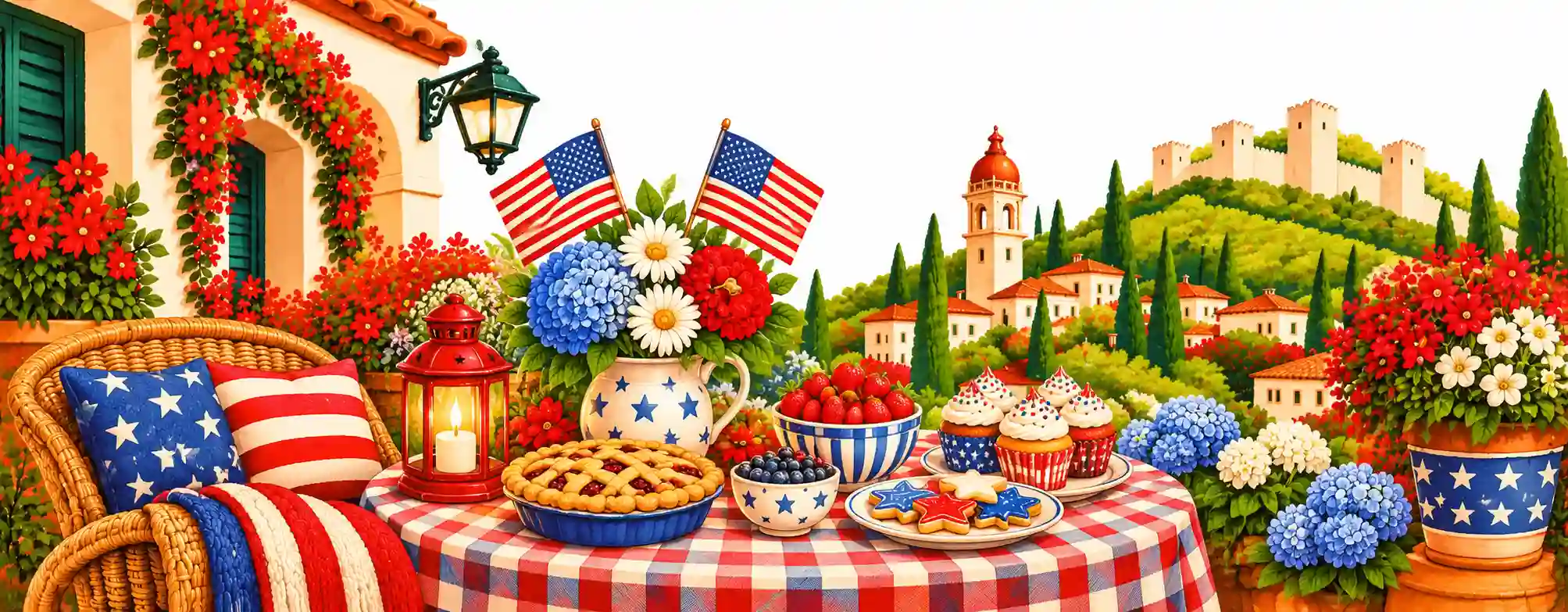
Beginner English · Independence Day
Independence Day in English
Independence Day, also called the Fourth of July, is the U.S. holiday on July 4 commemorating the adoption of the Declaration of Independence in 1776. Celebrations may include parades, fireworks, picnics, and barbecues. Learn English for the occasion and for asking about people’s plans.
Your next small win: Recognize two names for the holiday, describe an activity, and ask about someone's plans.
Start with useful words
Core Independence Day Vocabulary
Listen to the key words. Say each one aloud, then connect it with a meaning or example.
a U.S. holiday celebrating national independence
another name for Independence Day
the official flag of the United States
bright explosions of light in the sky
a public procession with music and floats
a special event to mark an important day
Recall three words
Say three words from the cards above without looking.
Independence Day, Fourth of July, American flag.
Fourth of July Traditions
an outdoor meal cooked on a grill
a meal eaten outdoors
a live music performance
the official song of a country
showing love for your country
a time when relatives get together
Traditional Food & Celebration
a cooked meat patty in a bun
a sausage served in a long bun
cooked corn still on the ear
a sweet dessert made with apples
a sweet drink made from lemons
a large sweet fruit with red flesh
A little cultural context
U.S. Independence Day is July 4 and is also called the Fourth of July. It commemorates the adoption of the Declaration of Independence in 1776. Celebrations may include fireworks, parades, picnics, and barbecues.
Build a short phrase
Useful Phrases and Activities
Use these short phrases in a real situation. Action cards show base verb forms; sentence cards show how to use them.
Useful Grammar
use this verb for holidays and special days
use this verb for fireworks, parades, and shows
use this verb for clothes and colors
Common Fourth of July Phrases
a greeting used on July 4
an invitation to see the fireworks together
we plan to cook outdoors today
the parade begins at 10:00
Useful verbs: celebrate a holiday, watch fireworks, and wear clothes or colors. Say on the Fourth of July for the date.
Use it yourself
Say you are having a barbecue and watching fireworks.
We're having a barbecue and watching fireworks.
Keep the conversation going
Questions You Can Use
Ask a question, then listen for the information in the answer. These examples help you talk about plans, preferences, and activities.
asking if someone will see the fireworks
asking if someone will cook outdoors
asking the location of the parade
asking what someone does on the holiday
Ask one question
Choose a question and say it aloud without looking.
Are you going to watch the fireworks?
More examples in context
the fireworks start at 9:00
we saw the parade as a group
people hold and move the flag in the air
we cooked outdoors behind the house
the group liked the live music
another common holiday greeting
Practice a short exchange
Everyday Conversations
Read both roles, then practice one role with a partner. Change a detail to make the conversation your own.
Talking about Independence Day
A question.
A reply.
A question.
A reply.
Take a role
Respond to the opening line of the conversation. Use the sample or change one detail.
Yes, we're having a barbecue with family.
Your turn · 8 quick questions
Practice: Independence Day
Choose the answer that fits each situation. Use the vocabulary and phrases from this lesson.
Practice complete
You can use English to talk about Independence Day.
A few phrases to revisit
One last step: use the language without choices.
Say you are having a barbecue and watching fireworks. Then ask one question from the lesson.
We're having a barbecue and watching fireworks.
Are you going to watch the fireworks?
Another everyday name for Independence Day. Which phrase fits?
- Fourth of July
- parade
- celebration
- national anthem
The Fourth of July is another name for Independence Day. Both names mean the same U.S. holiday.
Fourth of July
Bright explosions of light in the night sky. Which word fits?
- fireworks
- parade
- concert
- celebration
Fireworks are bright explosions of light in the sky. A parade is a procession in the street. A concert is live music.
fireworks
People march down the street with music and floats. Which word fits?
- parade
- fireworks
- concert
- barbecue
A parade is a public procession with music and floats. Fireworks happen in the sky, usually at night.
parade
You cook hamburgers and hot dogs on a grill outdoors. Which word fits?
- barbecue
- picnic
- concert
- family gathering
A barbecue is an outdoor meal cooked on a grill. A picnic is any meal eaten outdoors. It may not use a grill.
barbecue
You eat outside on a blanket, with no grill. Which word fits?
- picnic
- barbecue
- hot dog
- watermelon
A picnic is a meal eaten outdoors. A barbecue is cooked on a grill.
picnic
A sausage in a long bun. Which phrase fits?
- hot dog
- hamburger
- corn on the cob
- apple pie
A hot dog is a sausage in a long bun. A hamburger is a meat patty in a round bun.
hot dog
The official song of a country. Which phrase fits?
- national anthem
- concert
- parade
- patriotic
The national anthem is the official song of a country. Patriotic means showing love for your country. A concert is a live music performance.
national anthem
The official flag of the United States. Which phrase fits?
- American flag
- Fourth of July
- celebration
- family gathering
The American flag is the official flag of the United States. People often wear red, white, and blue on this holiday.
American flag